
SEARCH ENGINE MARKETING
SEARCH ENGINE MARKETING IN DIGITAL MARKETING
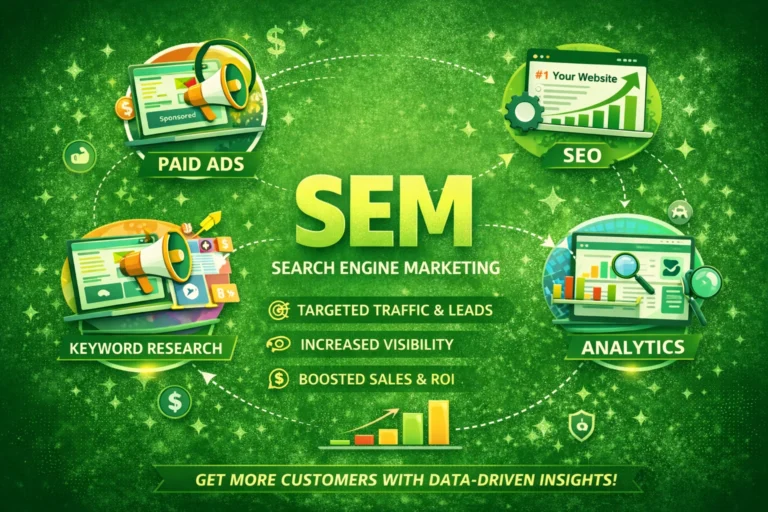
SEM in Digital Marketing
SEM in digital marketing refers to Search Engine Marketing, a powerful strategy used to promote websites through paid advertising on search engines. It helps businesses increase their visibility, attract targeted traffic, and achieve faster results compared to organic methods. By using paid campaigns, businesses can reach users who are actively searching for their products or services.
What is SEM in Digital Marketing?
SEM, or Search Engine Marketing, involves using paid advertising platforms like Google Ads to appear in search engine results pages (SERPs). These ads are usually displayed at the top of search results, giving businesses immediate visibility. Unlike SEO, which focuses on long-term organic growth, SEM delivers quick and measurable results.
Why is SEM Important in Digital Marketing?
SEM in digital marketing is important because it allows businesses to target specific audiences and generate instant traffic. It is especially useful for new businesses that want quick visibility. With proper targeting and strategy, SEM helps improve brand awareness, drive qualified leads, and increase conversions.Additionally, SEM allows businesses to control their budget and measure performance in real time, making it a highly efficient marketing strategy.
How SEM Works
SEM works by bidding on keywords that users search for on search engines. When a user enters a query, search engines display ads based on factors such as keyword relevance, bid amount, and ad quality. Advertisers pay only when users click on their ads, which is known as the pay-per-click (PPC) model.This makes SEM in digital marketing a cost-effective approach, as businesses only pay for actual engagement.
Key Components of SEM
SEM in digital marketing consists of several essential components:
- Keyword Research – Identifying high-performing keywords
- Ad Creation – Writing compelling ad copy
- Bidding Strategy – Managing cost-per-click (CPC)
- Landing Page Optimization – Improving user experience
- Performance Tracking – Analyzing campaign results
Each of these components plays a crucial role in the success of SEM campaigns.
Benefits of SEM in Digital Marketing
SEM in digital marketing offers several benefits for businesses:
- Immediate visibility on search engines
- Highly targeted audience reach
- Increased website traffic
- Better conversion rates
- Measurable and trackable results
These benefits make SEM one of the most effective strategies for achieving short-term marketing goals.
SEM vs SEO
SEM and SEO are both important aspects of digital marketing. While SEO focuses on improving organic rankings over time, SEM in digital marketing provides instant results through paid ads. Businesses often use both strategies together to maximize their online presence and achieve better outcomes.
SEM and Content Marketing
SEM works closely with content marketing in digital marketing to improve overall performance. High-quality content enhances landing pages, increases user engagement, and improves conversion rates. When combined with SEM, content marketing helps deliver more effective and meaningful results.
Challenges in SEM
Despite its advantages, SEM also comes with challenges. High competition for keywords can increase advertising costs. Additionally, poor targeting or ineffective ad copy can lead to wasted budget. Continuous monitoring and optimization are required to ensure successful campaigns.
Best Practices for SEM
To get the best results from SEM in digital marketing, businesses should follow these best practices:
- Conduct thorough keyword research
- Create clear and engaging ad copy
- Optimize landing pages for conversions
- Monitor campaign performance regularly
- Adjust bidding strategies based on results
Following these practices can help maximize return on investment (ROI).
Future of SEM in Digital Marketing
The future of SEM in digital marketing is evolving with advancements in artificial intelligence and automation. Smart bidding, audience targeting, and personalized ads are becoming more advanced, allowing businesses to achieve better results with less effort.
Conclusion
SEM in digital marketing is a powerful tool for driving targeted traffic and achieving quick results. By combining SEM with SEO and content marketing strategies, businesses can build a strong online presence and achieve long-term success.